
Starting primary school is one of the biggest moments in any child's life and for many it is the first time they will experience major change. How well that transition is supported shapes not just how the child settles into Junior Infants but their relationship with learning and school for years to come. This guide gives you the practical tools to make that transition as positive as possible.
Why the Transition from Creche to School Matters So Much
Research on early childhood transitions is unambiguous: the quality of the move from preschool to primary school has a measurable impact on children's social, emotional and academic outcomes throughout the primary years. Children who experience well-supported transitions settle faster, form positive relationships with teachers and peers more easily and engage with learning with greater confidence and curiosity.
For children with additional needs, children who have experienced adversity and children from disadvantaged backgrounds, the quality of transition support is even more critical. These children are most vulnerable to the disruption of change and benefit most from careful, planned and personalised transition support.
The First 5 Transition Commitments
First 5 is the Government's ten-year whole-of-government strategy for babies, young children and their families. Among its specific commitments in the area of transitions, First 5 calls for a national transition framework that supports continuity of learning and wellbeing between early years settings and primary schools, stronger relationships between the two sectors and appropriate sharing of information about children's learning to support continuity.
In 2026, these commitments increasingly shape what Tusla inspectors expect to see in terms of transition planning and evidence of partnership with local primary schools.
How to Build Relationships with Local Primary Schools
- Make contact with the principals of the primary schools your children typically transition to and introduce your setting and its approach
- Arrange visits to local primary schools for your preschool room children in April or May, ideally when the school environment is at its most welcoming
- Attend transition meetings or open evenings that local schools organise for incoming Junior Infant families
- Share transition portfolios with receiving teachers, with parental consent, to provide continuity of information about each child's strengths and learning style
Transition Portfolios and Learning Stories
A transition portfolio is a curated collection of a child's learning journey in your setting: observations, photographs, learning stories, examples of mark-making and art work, and a child-created personal profile. With explicit parental consent, this can be shared with the child's new teacher in September.
A well-prepared transition portfolio celebrates the child's strengths, interests and achievements, gives the receiving teacher a meaningful head start in knowing and understanding the child, provides continuity of learning so the teacher can build on what the child already knows and can do, and involves the child as an active and enthusiastic participant in the process.
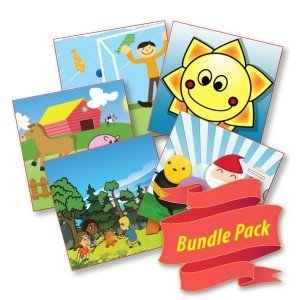
Early Years Shop's From Preschool to Primary School Emergent Interest Pack and Starting Big School Bumper Bundle provide practical, ready-to-use transition resources designed specifically for the Irish context. Browse the Educational Products range at earlyyearsshop.ie.
Parent Communication Strategies
Parents and guardians often experience the transition to primary school as intensely as their children. Anxiety about readiness, school choice, friendships and the end of the preschool chapter is common and entirely normal. Strategies for supporting parents through the transition include:
- Holding a dedicated transition information evening in spring covering what to expect in Junior Infants and how to support the transition at home
- Sharing a written transition guide with key information, reassurance and practical tips
- Encouraging parents to visit local primary schools' open days with their children
- Normalising a range of emotional responses to the transition, including mixed feelings for both children and parents
- Ensuring parents understand that the final ECCE year is a natural preparation for school, not an exam to pass
Emotional Readiness Activities
Children are emotionally ready for school when they can manage their own feelings reasonably well, engage with peers, follow simple instructions and tolerate the frustration of not always getting what they want immediately. These capacities are developed through high-quality early years experiences, not through school-readiness drills or formal academic preparation.
- Feelings vocabulary work using puppets, stories and role play to name and explore a wide range of emotions
- Collaborative play activities that build turn-taking, sharing and simple conflict resolution skills
- Mini-transitions within the daily routine such as tidy-up time and moving between learning areas
- Picture books about starting school read regularly and used to explore feelings and build positive anticipation
Final Thoughts
The transition from creche to primary school is a moment full of possibility and full of vulnerability. With the right preparation, strong family communication and genuine partnership with local schools, you can make it a positive, confidence-building experience for every child in your care. That is one of the most lasting gifts an early years practitioner can give.
Early Years Shop, part of the Canavan Byrne brand, provides transition packs, learning journals and graduation gowns that celebrate and support children on their journey to primary school.
Visit earlyyearsshop.ie to browse our Educational Products range including the From Preschool to Primary School pack, Starting Big School Bumper Bundle and Learning Journal Bundle.